- All
- Product Name
- Product Keyword
- Product Model
- Product Summary
- Product Description
- Multi Field Search

Views: 0 Author: Site Editor Publish Time: 2025-08-10 Origin: Site


The new national standard GB17945-2024 will be implemented in 2025: the voltage will be raised to 48V for greater safety, the luminous efficacy will double to 120lm/W, ternary lithium batteries will be banned, Bluetooth positioning rescue will be added, and monthly inspections and dynamic evacuation will lead the intelligent revolution of fire lighting.
On May 1, 2025, the national standard "Fire Emergency Lighting and Evacuation Indication Code" (GB17945-2024) officially came into effect, replacing the old 2010 version. This revision focuses on technological iteration, safety enhancement and scenario adaptation, and will have a profound impact on the field of building fire protection. The following is an interpretation of the key points of the new regulations from five core changes:
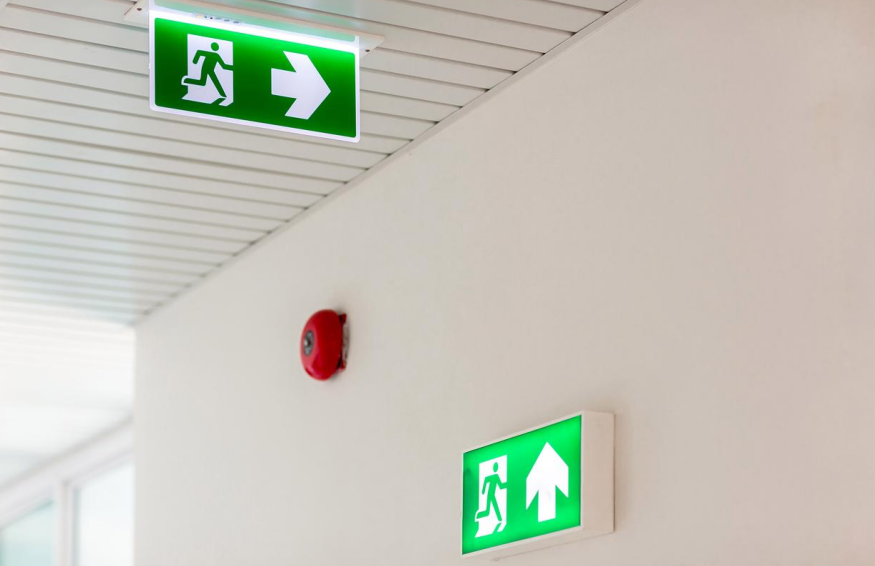
I. Voltage Upgrade: The voltage of Type A lamps has been increased from 36V to 48V
The new regulation raises the rated voltage of centralized control systems (Type A luminaires) from 36V to 48V. This adjustment is based on two considerations:
1. Safety enhancement: Even when fully charged, 48V remains below the 60V safety threshold, reducing the risk of electric shock to firefighters during rescue operations.
2. Performance optimization: Higher voltage reduces line voltage drop, extends power supply distance, and can support emergency lighting for a longer time under the same battery capacity.
3. Design Tip: For the 48V system, the line voltage drop needs to be recalculated. Refer to the 19D702-7 atlas to optimize the power distribution plan.
2. Luminous Efficacy Upgrade: The luminous efficacy per watt of the lighting lamp is ≥120 lumens
The new regulation clearly stipulates that the luminous efficiency of fire emergency lighting fixtures should reach 120lm/W, which is double that of conventional fixtures (50 to 60lm/W). This move has driven the industry
1. Technological iteration: Forcing enterprises to adopt high-efficiency LED chips and precise photometric design;
2. Energy conservation and consumption reduction: Power consumption is reduced by 50% under the same brightness, which is in line with the national "dual carbon" strategy.
3. Scene Adaptation: Meets the high-brightness requirements of complex environments such as super high-rise buildings and underground Spaces.
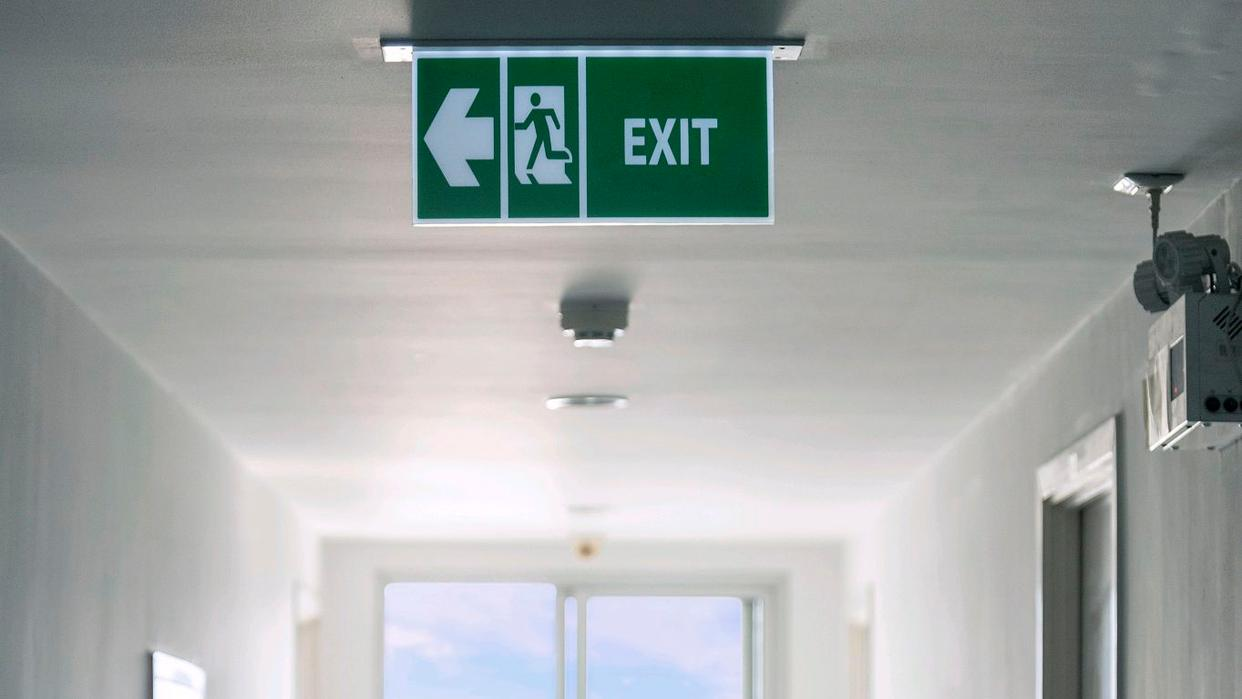
Iii. Battery Safety: Ternary lithium is prohibited and the capacity of lithium iron phosphate is limited
The new regulations impose triple constraints on batteries:
1. Ban high-risk batteries: Clearly phase out lithium cobalt oxide and ternary lithium batteries to avoid the risk of thermal runaway.
2. Capacity limitations: The capacity of a single lithium iron phosphate battery pack is ≤0.5kWh (approximately 1/3 of an electric bicycle battery), and that of a lead-acid battery pack is ≤5kWh.
3. Segmented management: Batteries with a voltage greater than 12V need to be packaged separately, and each cell should have an independent short-circuit protection device.
Industry impact: Over 30% of small and medium-sized enterprises with weak technologies may face elimination.
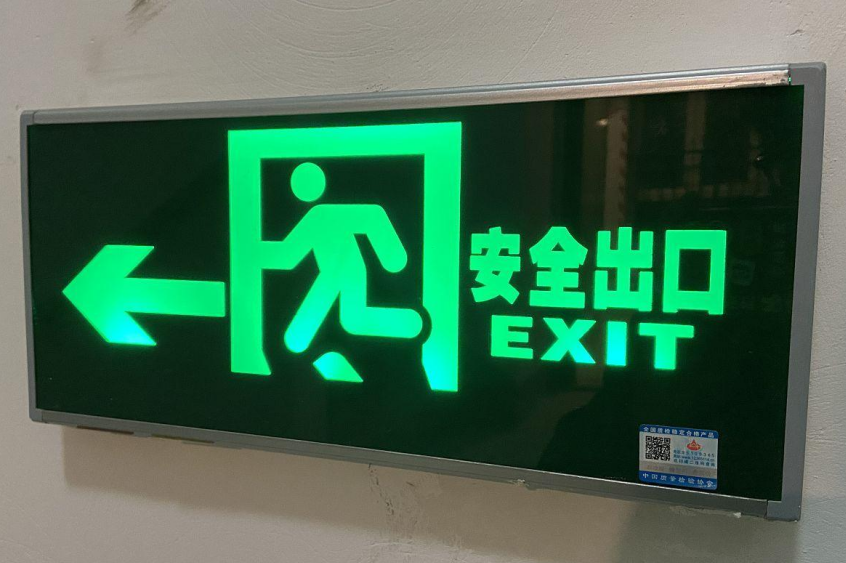
Iv. Intelligent Upgrade: New personnel positioning and graphic display functions have been added
The new regulation introduces Bluetooth positioning technology to build a "precise rescue" system:
Trapped person location: The lamp connects to the trapped person's mobile phone via Bluetooth, and the location information is uploaded to the emergency lighting controller in real time.
2. Rescue personnel trajectory tracking: Firefighters wear positioning devices, and their movement trajectories are presented in real time on the graphic display device (graphic display).
3. Dynamic evacuation guidance: The variable indicator light can dynamically adjust the escape path according to the fire situation, improving the evacuation efficiency.
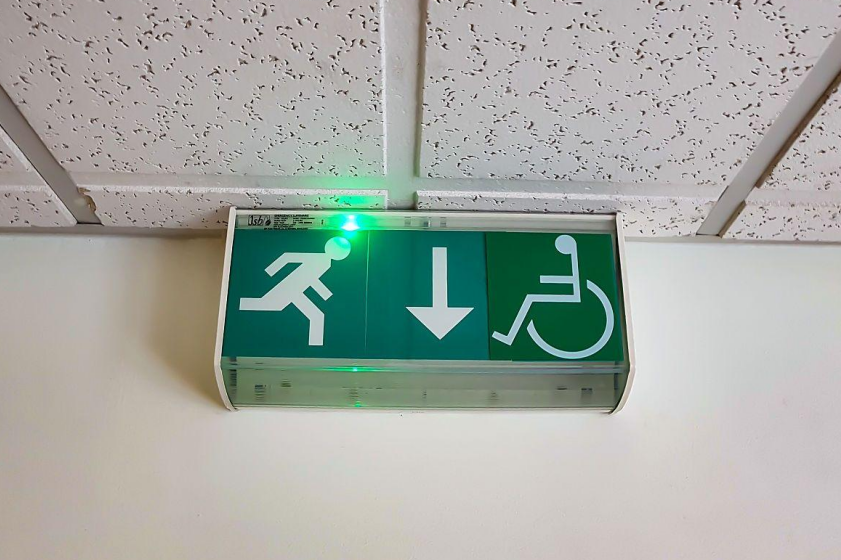
V. System Optimization: Unified Classification and Self-check Enhancement
1. New regulations restructure the system architecture:
Classification simplification: Eliminate the subdivision of "centralized power supply type/self-contained power supply type" and unify it into centralized control type and non-centralized control type.
Self-inspection reinforcement: The self-inspection frequency has been changed from annual inspection to monthly and quarterly inspection, and the emergency start-up test time has been extended from 30 seconds to 5 to 10 minutes.
Data retention: Self-check records must be forcibly stored and uploaded to the graphic display device. The retention period for fault information is no less than 3 years.
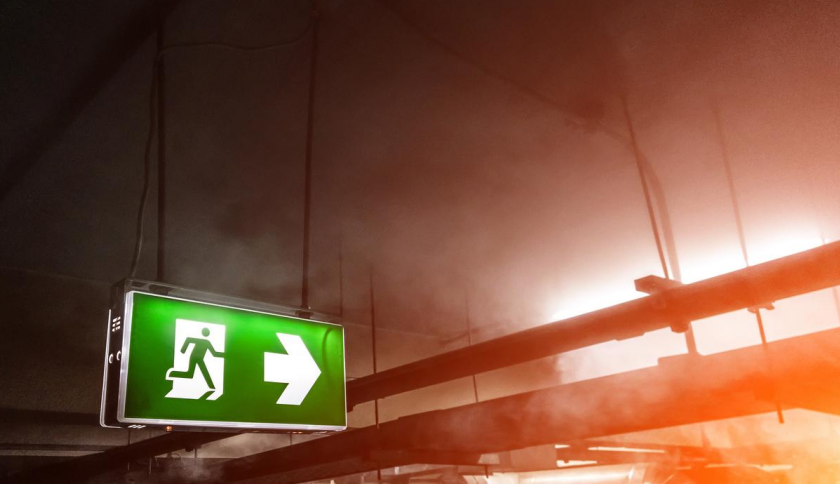
Summary: Industry reshuffling and technological upgrading go hand in hand. The implementation of GB17945-2024 marks the entry of fire emergency lighting systems into an era of "high safety and intelligence". For the construction industry:
1. Design end: It is necessary to update the GB51309-2018 technical standard simultaneously, with a focus on the adaptation of voltage, light efficiency and positioning functions.
2. Construction end: Strengthen the acceptance of details such as ground lamps (rated voltage ≤36V) and protection grade (ground lamps IP67).
3. Operation and maintenance end: Establish a monthly/quarterly self-inspection mechanism to ensure continuous compliance of the system.
This revision is not only an opportunity for technological upgrading but also a milestone in the process of industry standardization. Only by closely following standards and strengthening technological reserves can one gain the upper hand in the new round of industry transformation.
Reprinted from: https://baijiahao.baidu.com/s?id=1830959576104997801&wfr=spider&for=pc


